Belt Elevator Hopper | Cleated Inclined Belt Feeder for Hard-to-Flow Parts
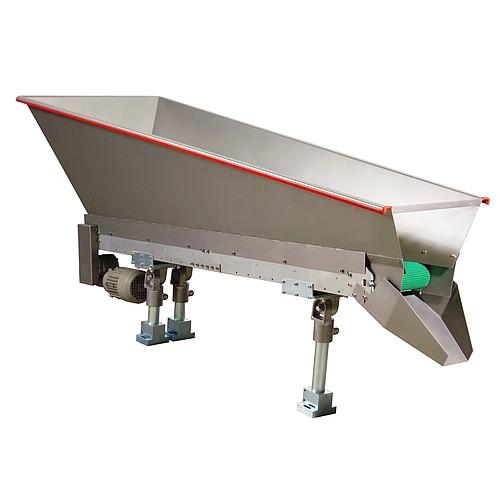
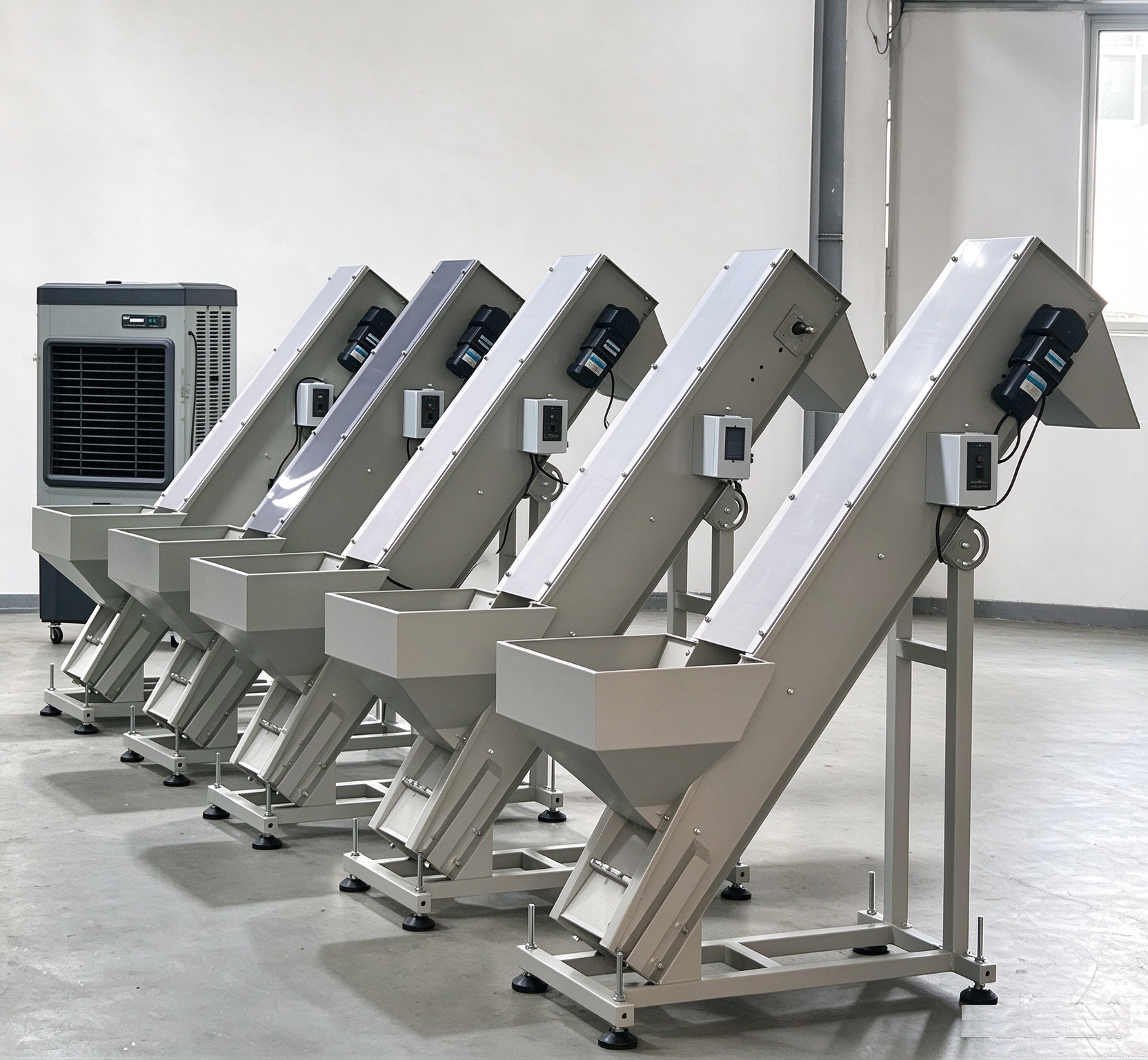
A belt elevator hopper, also known as cleated inclined belt feeder, is specially engineered for irregular or complex-shaped workpieces that tend to bridge and jam inside standard hoppers. It transports bulk parts directly from the storage bin via the cleated inclined belt, removing the need for an extra intermediate trough feeder between hopper and elevator.
How this anti-bridging feeding system works
The biggest pain point with irregular fasteners, stamped metal and odd plastic parts is material bridging. Most regular hoppers stop feeding once parts lock together at the outlet. The continuous pulling motion of the cleated belt automatically breaks these blockages and delivers a steady, consistent part stream to downstream equipment like vibratory bowl feeders.
Main Construction
Each feeding assembly consists of:
- Bulk storage bin for holding bulk workpieces
- Motor-driven cleated belt conveyor
- Control system for speed adjustment
- Heavy-duty mainframe to support all mounted components
When customizing your cleated inclined belt feeder, we evaluate these factors: storage capacity, part dimension & weight, belt and cleat type, and required discharge height.
Available Optional Features
✅ Elevator extension sections for higher discharge height
✅ Stainless steel components and full frame
✅ Continuous welded construction for structural strength & hygiene
✅ Protective covers for hopper and conveyor
✅ Washdown rated sealed motors for easy cleaning
Typical Applications
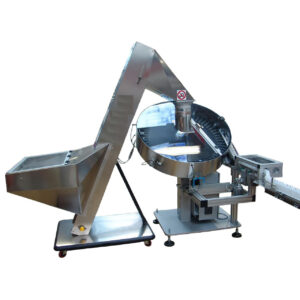
This anti-bridging hopper feeder is widely integrated with vibratory bowl feeders and automatic assembly lines. Suitable for plastic parts, stamped metal components, fasteners and other irregular workpieces. Custom hopper size, belt material and inclination angle on request.
It fits well in automated sorting, assembly and packaging processes, especially where fragile or oddly shaped components cannot flow reliably from conventional gravity hoppers. Our team can match the feeder speed and discharge position to your existing bowl feeder or indexing conveyor.